

Cough with phlegm occurs in Ayurveda mainly due to the aggravation of Kapha dosha, which increases mucus production and obstructs the respiratory channels (Pranavaha Srotas). According to Charaka Samhita – Chikitsa Sthana (17/8), vitiated Kapha combines with Vata to produce productive cough (Kaphaja Kasa). Excess cold, heavy, oily foods and exposure to cold weather further increase Kapha, causing congestion and sticky phlegm in the chest. As described in Ashtanga Hridaya – Nidana Sthana (4/4), impaired digestion (Mandagni) also contributes to mucus buildup and repeated cough episodes.
-11%

18
Items sold in last 3 hours
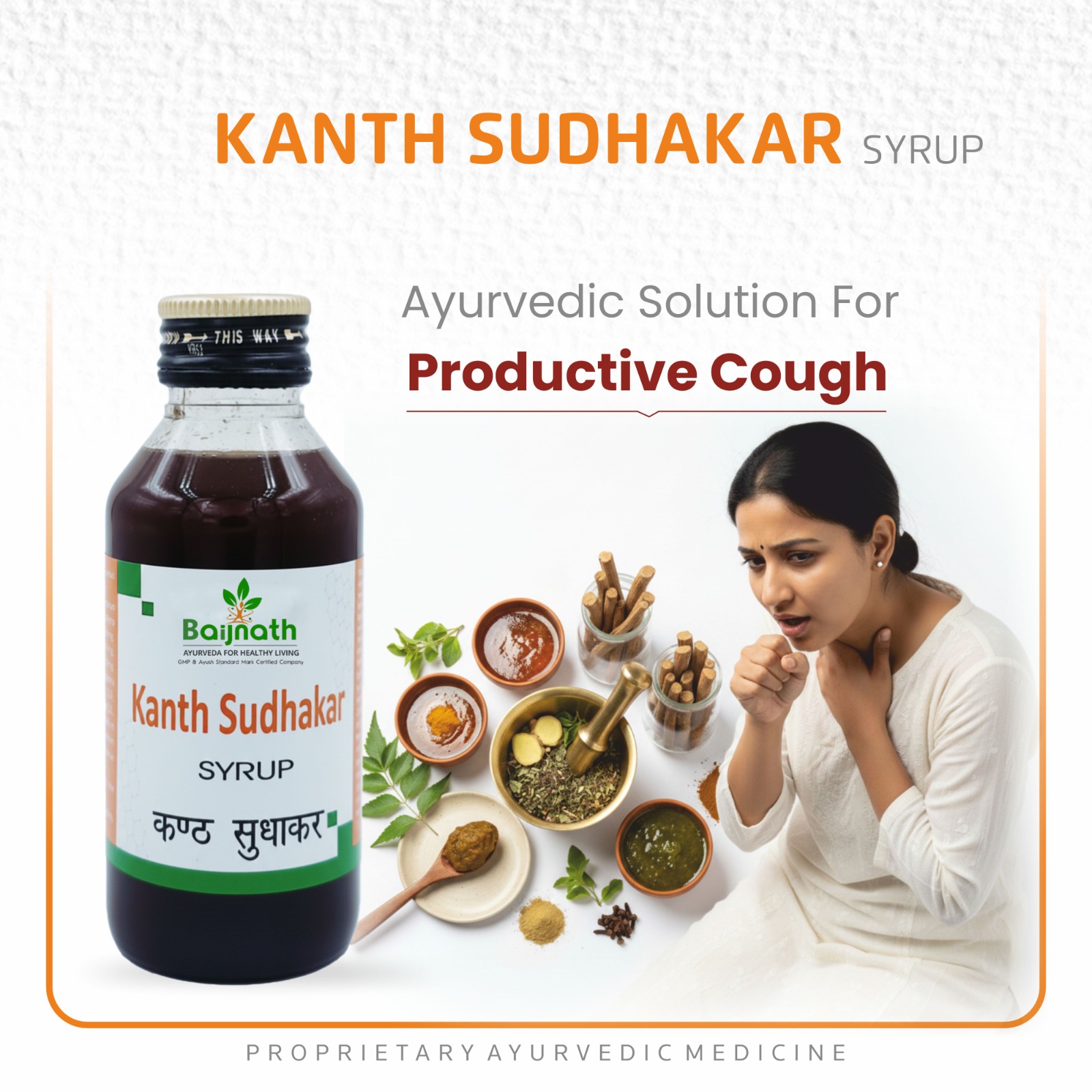
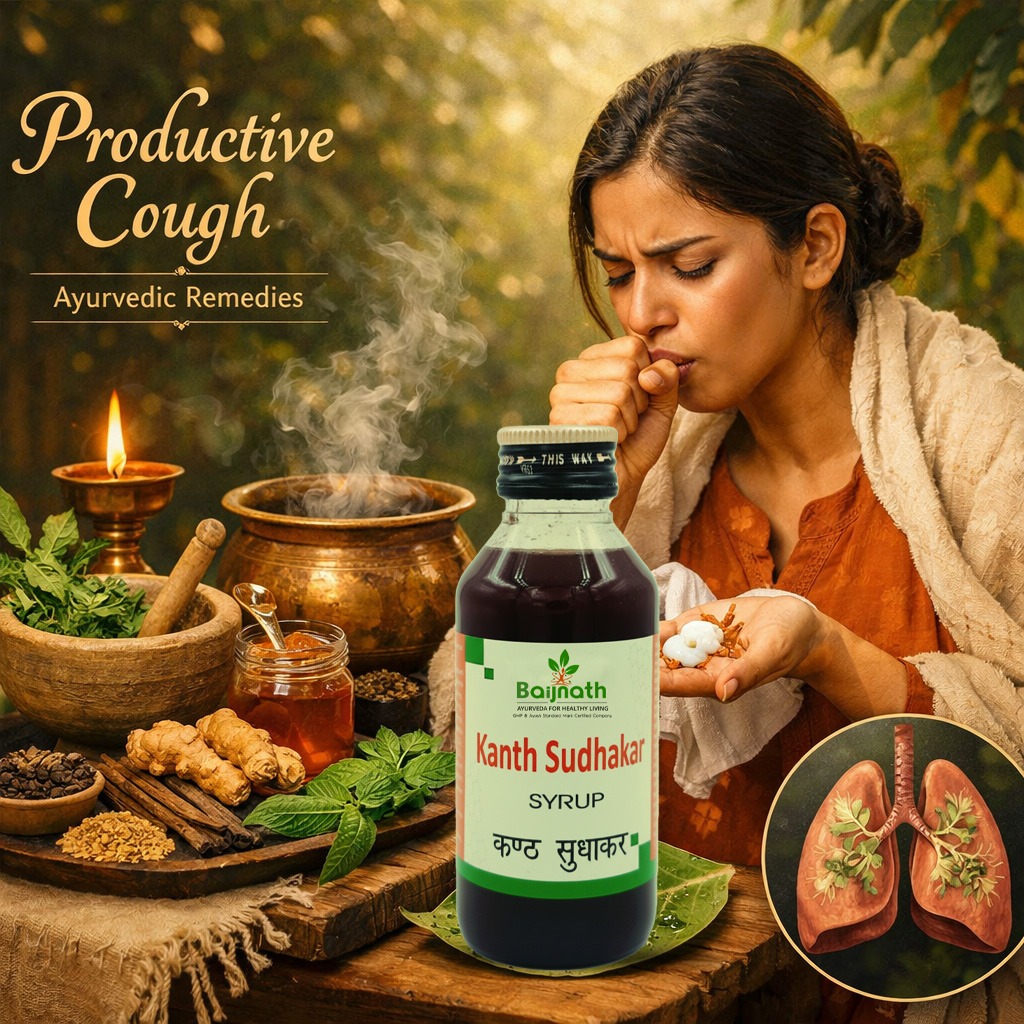
Kanth Sudhakar 200 ml I Ayurvedic Cough Syrup
Original price was: ₹180.00.₹160.00Current price is: ₹160.00.
20
People watching this product now!
What Triggers Productive Cough?
What are the symptoms of Productive Cough?
In Ayurveda, a productive cough (Kaphaja Kasa) is marked by thick, sticky, and often white phlegm due to aggravated Kapha dosha. Charaka Samhita (Chikitsa Sthana 17/8–10) describes symptoms such as heaviness in the chest, mild breathlessness, and a feeling of mucus obstruction in the throat and lungs. Patients may experience lethargy, a low-pitched cough sound, and a sweet or bland taste in the mouth, which are classic Kapha indicators. Ashtanga Hridaya (Nidana Sthana 4/4–5) also notes excessive salivation, nasal congestion, and slow, dull breathing as common signs of productive cough.
What are the Ayurvedic Remedies for Productive Cough?
1. Warm Spices (Sunthi, Pippali, Marich)
A mixture of dry ginger, long pepper, and black pepper (Trikatu) helps reduce excess Kapha, liquefy mucus, and improve respiratory flow.
2. Honey With Ginger Juice
A traditional remedy described in Ayurveda for soothing the throat and promoting easy expulsion of phlegm. Honey acts as a natural expectorant, while ginger reduces Kapha and inflammation.
3. Sitopaladi Churna
Mentioned in Charaka Samhita, it helps clear congestion, supports lung function, and reduces mucus formation.
4. Tulsi and Mulethi Decoction
Boiling Tulsi leaves with licorice root helps thin phlegm, relieve chest heaviness, and ease coughing.
5. Steam Inhalation With Ajwain or Pudina
Warm steam supports the clearing of Kapha from nasal and respiratory passages and reduces chest congestion.
6. Warm Water and Light Diet
Ayurveda advises avoiding cold, heavy, or oily foods and drinking warm water to stop Kapha buildup and support digestion (Agni), which is essential for respiratory health.
How Kanth Sudhakar Syrup Works for Productive Cough?
Kanth Sudhakar Syrup is a powerful Ayurvedic cough syrup for productive cough, formulated with herbs traditionally described in Ayurvedic classics under Kasahara (cough-relieving) and Kaphahara (phlegm-reducing) categories. Vasa, Kantakari, and Banafsha act as natural expectorants, helping to liquefy thick phlegm and promote smooth mucus expulsion, as referenced in Charaka Samhita – Kasahara Dravya Adhyaya. Khatmi and Yashtimadhu (Glycyrrhiza glabra) provide a soothing, demulcent effect on the respiratory tract, reducing throat irritation and supporting healing as mentioned in Bhavaprakasha Nighantu. Sirisha helps relieve allergic congestion and reduces airway sensitivity, while Madhu (honey) offers natural antimicrobial and cough-soothing properties, enhancing the syrup’s overall effectiveness. This combination supports clearer breathing, reduces chest heaviness, and provides gentle yet effective relief from productive cough.
Dose
10 ml twice daily after meal
Reviews
There are no reviews yet.