

Understanding the Root Causes of Cough
As per Ayurveda, cough is called Kasa, and it occurs mainly due to the vitiation of Vata and Kapha doṣas.
When Kapha doṣa increases because of factors like cold food, heavy or oily diet, exposure to cold air, dust, smoke, or seasonal changes, it accumulates in the Prāṇavaha srotas (respiratory channels). This excess Kapha produces mucus and obstructs the normal movement of Vāta doṣa. The aggravated Vāta then moves upward forcefully, creating the reflex action known as cough.
Ayurvedic texts also explain that weak digestion (Agnimandya) leads to the formation of Ama (toxins), which further irritates the respiratory tract and triggers cough. Mental stress, suppression of natural urges, excessive talking, and dryness of the throat can also vitiate Vata and contribute to cough.
Based on the predominance of doṣas, Ayurveda classifies cough into Vataja, Pittaja, Kaphaja, Kṣayaja, and Kṣataja Kasa, and treatment is planned accordingly by balancing the disturbed doṣas and clearing the respiratory channels.
Natural Home Remedies and Classical Herbs for Cough Relief
In Ayurveda, cough (Kasa) is described as a disorder of the Praṇavaha srotas caused mainly by vitiation of Kapha and Vāta, as explained in Caraka Saṁhita, Cikitsasthana Kasa Cikitsa. Home remedies such as honey with warm water, turmeric milk, and ginger decoction help liquefy Kapha and soothe the throat while supporting Agni. Tulsi and Sunthi are mentioned in classical texts for reducing mucus and relieving respiratory irritation. Vasa (Vasa) is well known in Ayurveda for its expectorant action and is indicated in Kasa and Svasa due to its Kapha-pitta pacifying properties. Yashtimadhu acts as a demulcent and is recommended for dry and irritating cough by coating and healing the throat. Pippali and Maricha, described in Trikatu, enhance digestion and help clear obstructed respiratory channels by reducing accumulated Kapha. Tankan (Borax) is traditionally used for its Kapha-lekhana and mucolytic action, helping in thick sputum and chest congestion. Katphala, mentioned in Bhavaprakasa Nighaṇṭu, is effective in cough and throat disorders due to its astringent and expectorant properties, making these remedies collectively beneficial for managing cough naturally.
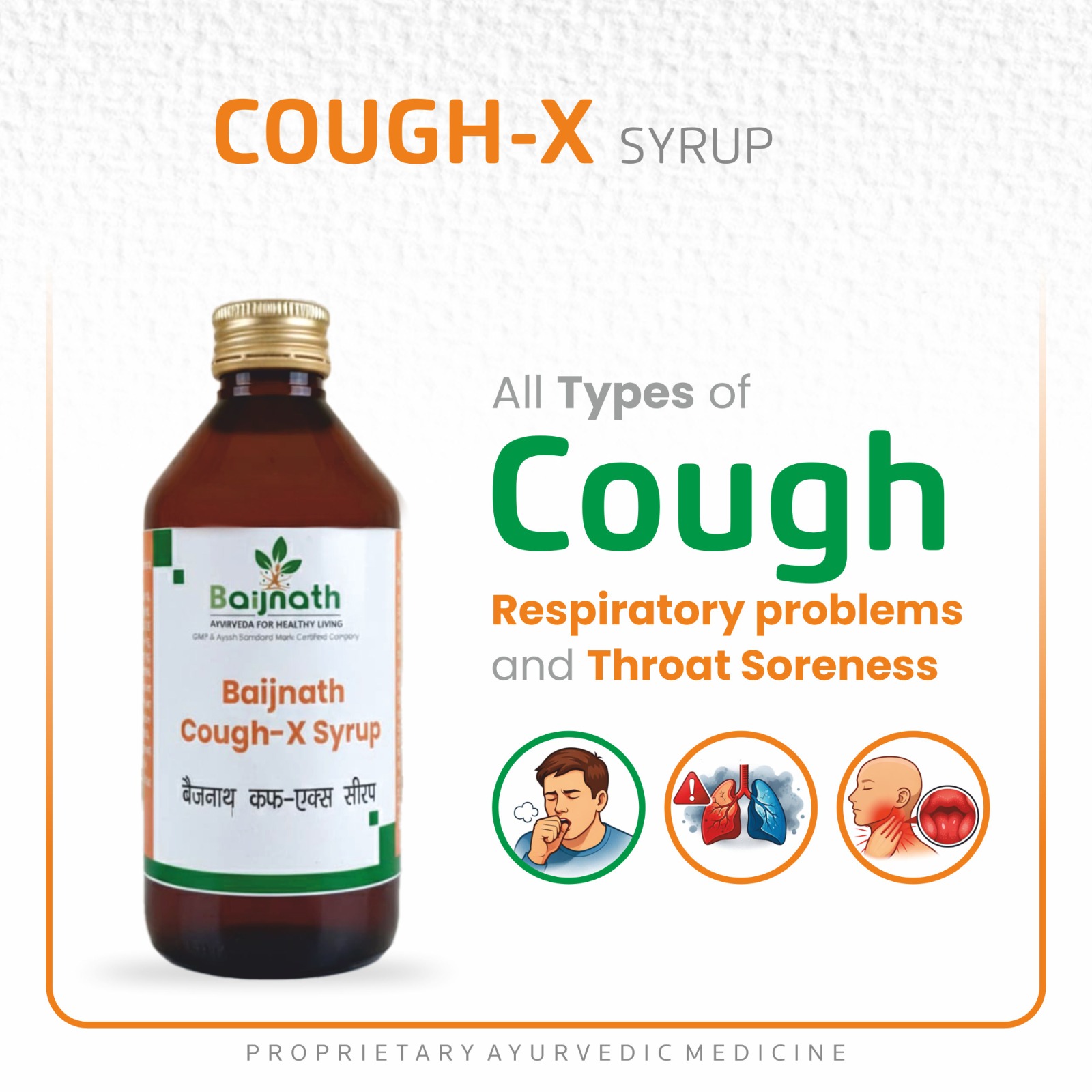
Cough-X Syrup: Ayurvedic Support for Cough Relief, Respiratory Health, and Throat Comfort
Cough-X Syrup is an Ayurvedic medicine formulated to support cough relief, respiratory wellness, and throat soreness using time-tested herbs mentioned in classical texts like Charaka Saṁhitā and Bhāvaprakāśa. According to Ayurveda, cough (Kāsa) occurs due to vitiation of Kapha and Vāta doṣas in the Prāṇavaha srotas, and this formulation works by balancing these doṣas. Vasa (Adhatoda vasica) is described in Ayurvedic texts for its Kapha-shāmaka and Śvāsa-Kāsa hara action, and modern studies show it contains vasicine, which acts as a bronchodilator and expectorant. Katphala, mentioned in Bhāvaprakāśa, helps reduce throat irritation and mucus, while scientific studies support its antimicrobial and anti-inflammatory properties. Kantakari is traditionally used for respiratory disorders and helps clear congestion, which aligns with modern evidence of its bronchodilatory effect. Yashtimadhu soothes throat soreness by its Madhura rasa, and modern science confirms its demulcent and anti-ulcer properties that protect the throat lining. Madhu (honey) acts as a natural carrier (Yogavahi) in Ayurveda and is clinically proven to reduce cough frequency and throat irritation. Tankan helps break down thick Kapha and supports easier expectoration, making breathing more comfortable. Together, these herbs help reduce dry and productive cough, ease chest congestion, and support lung function. Cough-X Syrup is therefore beneficial for cough treatment, throat pain relief, respiratory health, herbal cough syrup, and natural cough remedy, making it suitable for daily respiratory care.
Reviews
There are no reviews yet.