

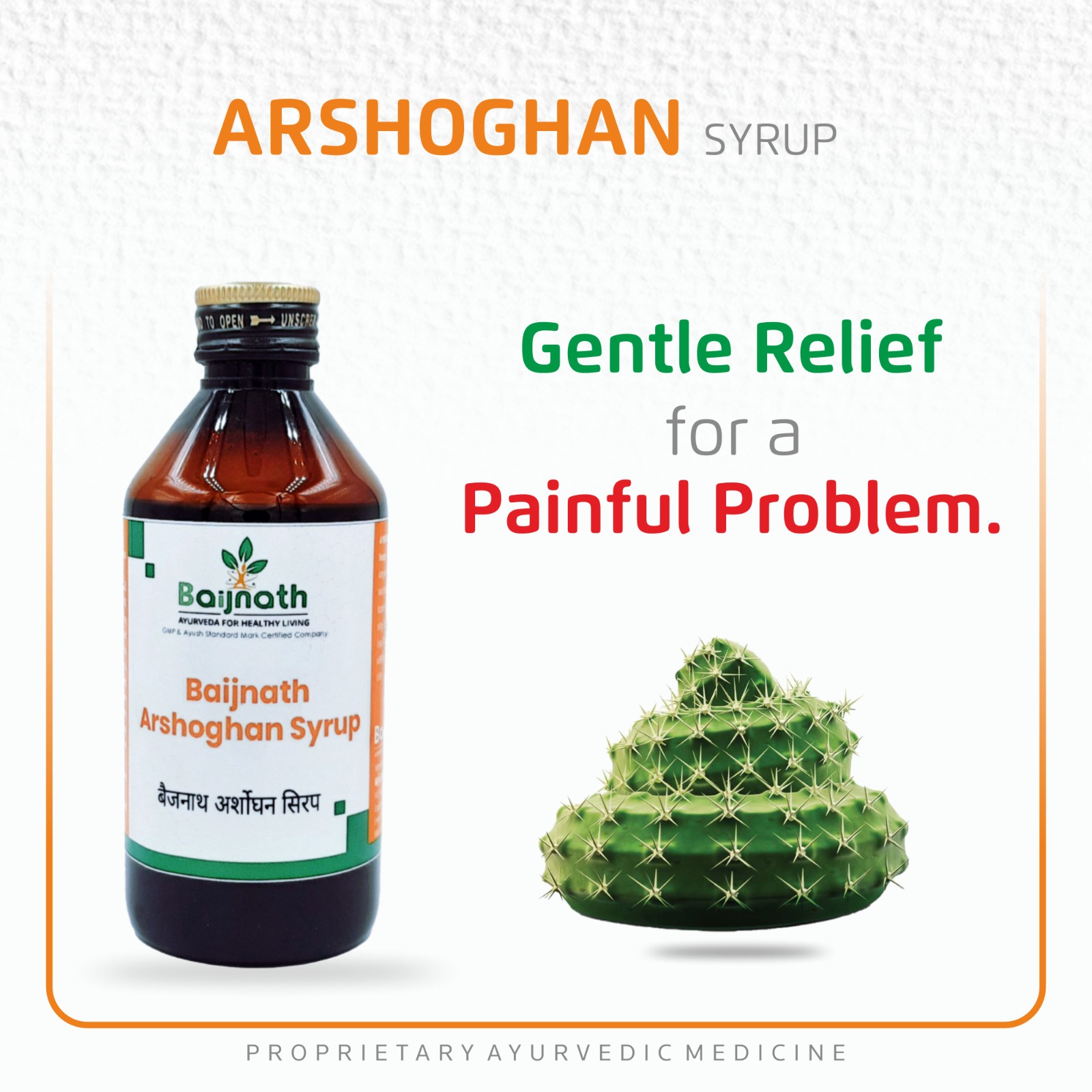
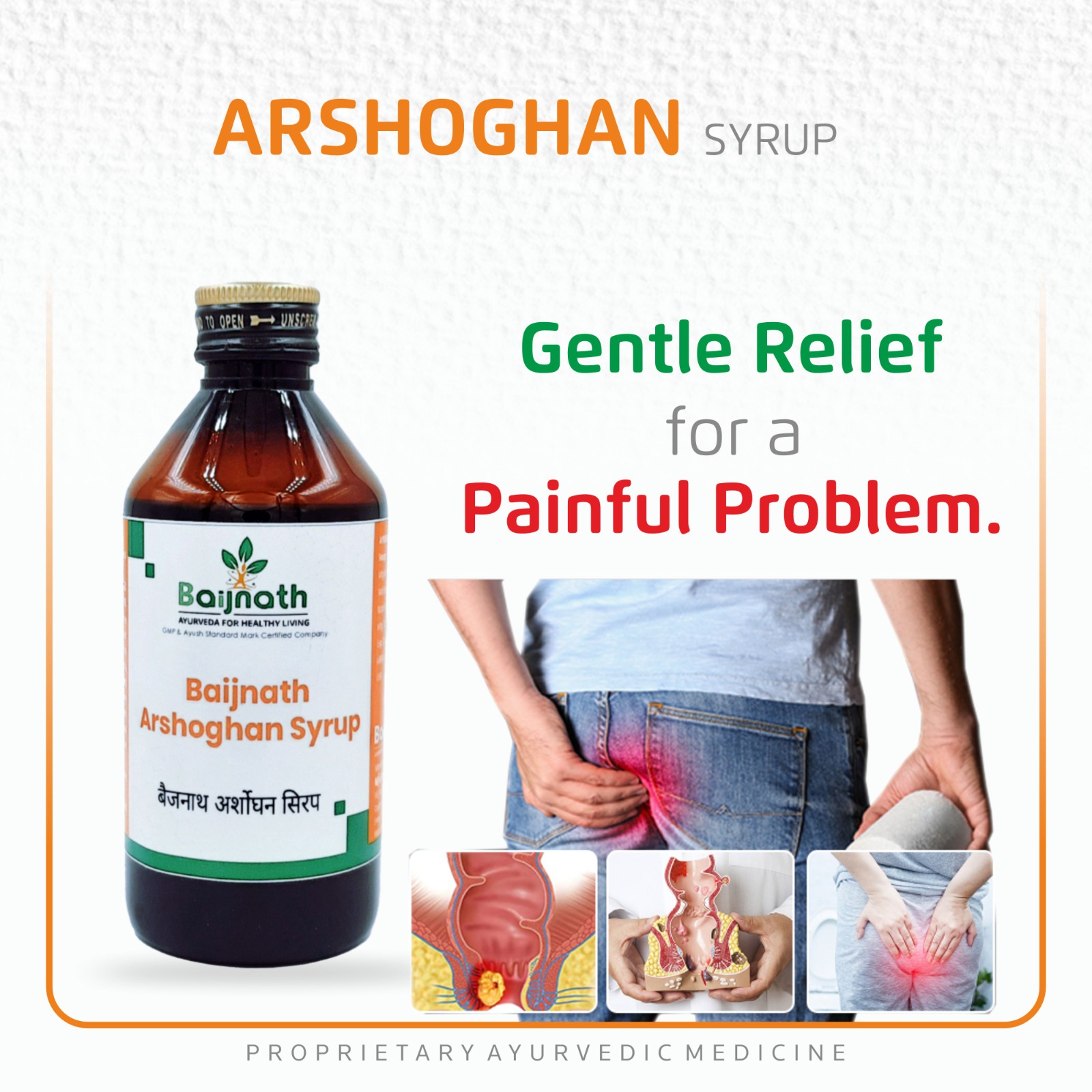

Arshoghan Syrup 200 ml I For Piles and Constipation
Original price was: ₹190.00.₹160.00Current price is: ₹160.00.
Scientific Explanation:
Constipation and piles are closely linked because chronic constipation causes repeated straining during bowel movements, which increases pressure on the veins of the rectum. When stool becomes hard and dry, the rectal muscles must exert more force to push it out, leading to swelling, stretching, and weakening of the anal veins. Over time, this strain causes the veins to bulge, forming hemorrhoids (piles). Medical literature from the American College of Gastroenterology (ACG) explains that prolonged sitting on the toilet and excessive straining disrupt blood flow in the anorectal region, making the veins more likely to become inflamed. Constipation also slows intestinal transit time, causing further dehydration of stool, which worsens the cycle and increases the risk of developing piles.
Ayurvedic Overview:
Ayurveda describes this relationship under the concepts of Vata imbalance and Arsha (piles). Chronic constipation is caused by aggravated Vata dosha, which dries the colon, hardens stool, and produces difficulty in defecation. This prolonged straining disturbs the natural flow of Apana Vata, creating pressure and obstruction in the anal region, eventually leading to piles, as mentioned in Charaka Samhita – Chikitsa Sthana. Poor Agni (digestive fire), irregular eating habits, low-fiber diet, and suppression of natural urges further weaken digestive function and promote Ama (toxins) that irritate rectal tissues. As per Ayurveda, constipation not only triggers the formation of piles but also worsens symptoms like pain, bleeding, and swelling due to continuous Vata aggravation. By correcting digestion, softening stool, and balancing Vata, Ayurveda aims to break the root cause linking constipation and piles.
Yes, piles can be cured, depending on their type and severity, and both modern medicine and Ayurveda provide effective treatment approaches. Modern science states that early-stage hemorrhoids (Grade I and II) can be cured through dietary changes, increased fiber intake, proper hydration, topical treatments, and lifestyle modification. Medical references like the American Society of Colon and Rectal Surgeons (ASCRS) confirm that minimally invasive procedures—such as rubber band ligation, sclerotherapy, or infrared coagulation—can permanently resolve many cases. Advanced piles (Grade III and IV) may require surgical correction, and procedures like hemorrhoidectomy or stapled hemorrhoidopexy can offer long-term cure with low recurrence.
Ayurveda explains piles as Arsha, caused by imbalanced Vata, Pitta, and Kapha doshas, and poor digestive fire (Agni). According to Charaka Samhita (Chikitsa Sthana 14) and Sushruta Samhita, early-stage piles can be cured using internal herbal medicines, dietary correction, and Panchakarma therapies like Basti (medicated enema). Herbs like Haritaki, Triphala, Kutaj, Daruharidra, and Nimba help restore digestion, soften stools, and reduce swelling. For moderate to severe cases, Ayurveda recommends procedures such as Kshara karma (chemical cauterization) and Kshara sutra therapy, which Sushruta describes as a curative treatment for both internal and external piles with very low recurrence rates. With proper lifestyle changes, bowel regulation, and timely treatment, both modern medicine and Ayurveda recognize that piles can be effectively treated and, in many cases, completely cured.
As per Ayurveda, piles (Arsha) occur due to the imbalance of Vata, Pitta, and Kapha doshas, affecting the digestive and rectal region. Weak Agni (digestive fire) is a major cause of chronic constipation and hard stools, which strain the rectal veins. When Vata dosha becomes aggravated, it causes dryness and reduced bowel lubrication, making stool passage difficult and contributing to hemorrhoid formation. Pitta aggravation results from spicy food, alcohol, and excessive heat in the body, causing inflammation, burning sensation, and bleeding piles. Kapha imbalance leads to stagnation, swelling, and mucus accumulation in the anal region. Poor dietary habits like heavy, oily, junk food and irregular eating patterns weaken digestion and promote toxin (Ama) buildup, which further irritates the rectal tissues. Sedentary lifestyle, lack of physical activity, and prolonged sitting also increase pressure on rectal veins, contributing to the development of piles. Suppressing natural urges, especially the urge to defecate, is another important Ayurvedic cause of hemorrhoids. Stress and mental strain disturb Vata and impair digestive function, worsening constipation and piles symptoms. Overall, Ayurveda explains that piles occur when poor digestion, unhealthy diet, and lifestyle imbalance affect rectal circulation, leading to swelling, pain, and discomfort.
Arshoghan Syrup is an effective Ayurvedic remedy for piles and constipation formulated with herbs traditionally described in Charaka Samhita and Bhavaprakasha Nighantu for improving bowel health and reducing rectal discomfort. Haritaki, rich in tannins and chebulinic acid, acts as a natural mild laxative that softens stools and prevents straining, making it highly beneficial in both constipation and hemorrhoids. Bilva, known for its stool-binding property and anti-inflammatory phytochemicals like marmelosin, helps tone the intestines and reduce irritation in the rectal veins. Pippali contains piperine, which enhances digestion, improves Agni (digestive fire), and reduces the formation of Ama (toxins) that aggravate piles. Aloe vera, rich in aloin and polysaccharides, provides a soothing, anti-inflammatory effect that reduces burning, swelling, and discomfort associated with piles. Trivrit (Operculina turpethum) supports gentle cleansing of the bowels and helps regulate Apana Vata, preventing the hard stools that trigger hemorrhoid formation. Together, these herbs promote smooth bowel movements, reduce pressure on rectal veins, and support overall anorectal health. Ayurvedic texts describe Haritaki and Trivrit as essential herbs in Virechana therapy, which is used to clear constipation and balance Pitta and Vata aggravation. By improving digestion, softening stool, and reducing inflammation, Arshoghan Syrup addresses both the root cause and symptoms of piles. Overall, this formulation works holistically to restore digestive balance, relieve constipation, and support long-term recovery from piles.
Reviews
There are no reviews yet.